🍜 Hakka Noodles – The Ultimate Guide to India’s Favorite Indo-Chinese Noodles (Premium Food Blog Edition)
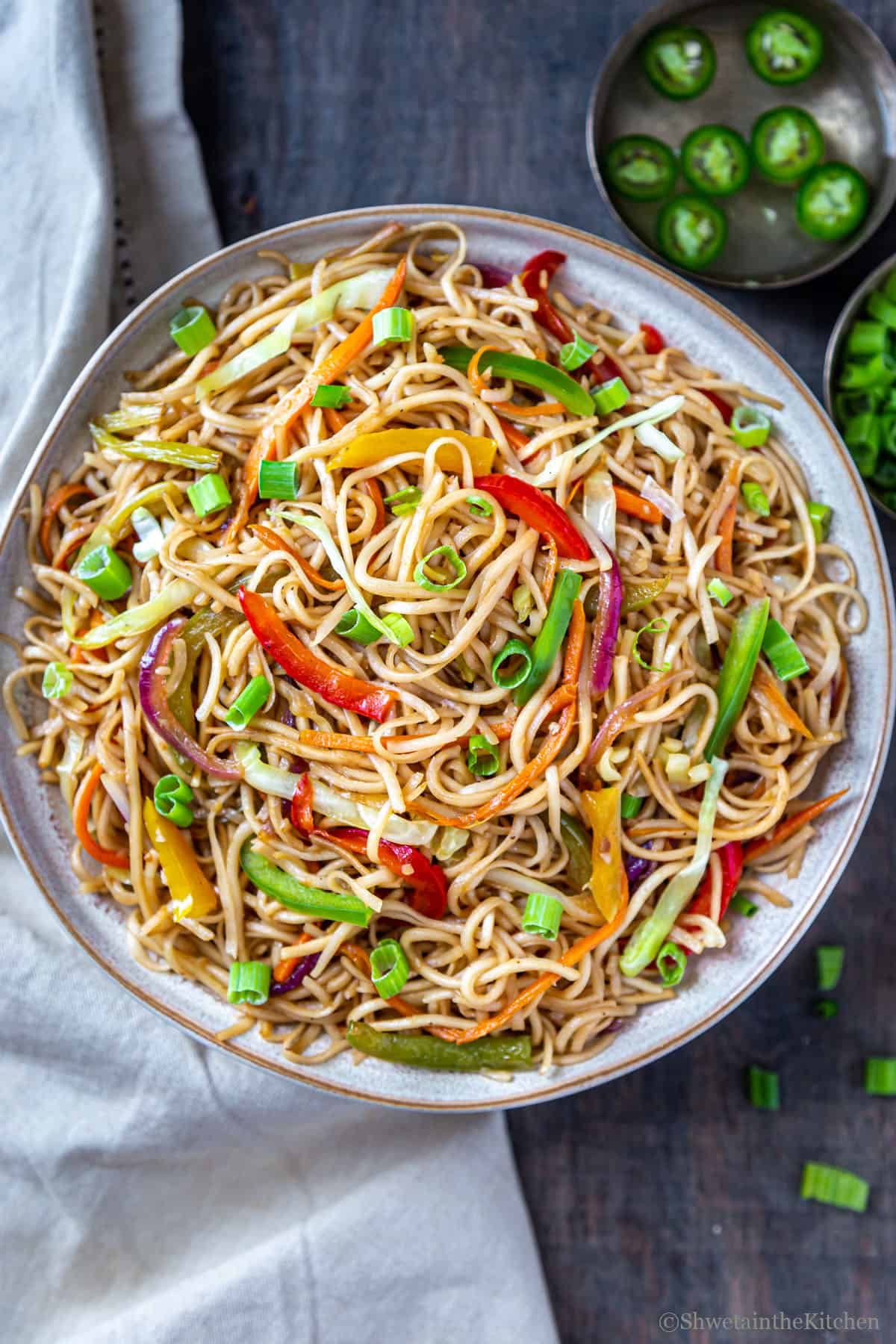
Hakka Noodles is one of the most popular Indo-Chinese dishes ever created — a perfect balance of springy noodles, crunchy vegetables, smoky wok flavor, and tangy-spicy sauces. Whether you eat it at a street stall, a restaurant, or make it at home, Hakka Noodles always deliver comfort, nostalgia, and mouthwatering satisfaction.

This premium long-form article dives deep into the world of Hakka Noodles:
✔ Their history
✔ Authentic cooking methods
✔ Restaurant-style techniques
✔ Step-by-step recipe
✔ The best vegetables & sauces
✔ Tips for smoky noodle flavor
✔ Variations (veg, egg, chicken, paneer)
✔ Expert chef guidance
✔ A full FAQ section
Everything is written in a food blog–friendly style, perfect for SEO and user engagement.
⭐ What Are Hakka Noodles? – A Flavorful Introduction
Hakka Noodles is a stir-fried noodle dish influenced by Chinese cooking but developed uniquely in India. It features:
- Boiled noodles
- Crunchy vegetables
- Aromatic garlic & ginger
- Soy, vinegar, chili & umami sauces
- High-heat wok tossing
The end result is a plate of noodles that is:

- Smoky
- Spicy
- Slightly tangy
- Perfectly coated
- Bursting with Indo-Chinese flavors
Hakka Noodles serve as the base for countless restaurant dishes like schezwan noodles, triple rice, chili garlic noodles, and gobi manchurian combos. Its simplicity and versatility make it a household favorite.
⭐ History of Hakka Noodles – From China to India
Although inspired by Chinese cuisine, Hakka Noodles as we know them are an Indian invention.
🇨🇳 Chinese Origin
“Hakka” refers to the Hakka community of China, known for migration and rich culinary heritage.
🇮🇳 Indian Transformation
When Chinese immigrants settled in Kolkata and Mumbai, their traditional recipes merged with Indian flavors, birthing Indo-Chinese cuisine.
Indian chefs:
- Increased spice levels
- Added Indian vegetables
- Introduced chili sauce & schezwan flavors
- Cooked on extremely high heat
Thus, Hakka Noodles became a uniquely Indian dish loved by children and adults alike.
🥗 Ingredients Required for Perfect Hakka Noodles
A restaurant-style Hakka Noodles uses high-quality ingredients and follows correct technique.
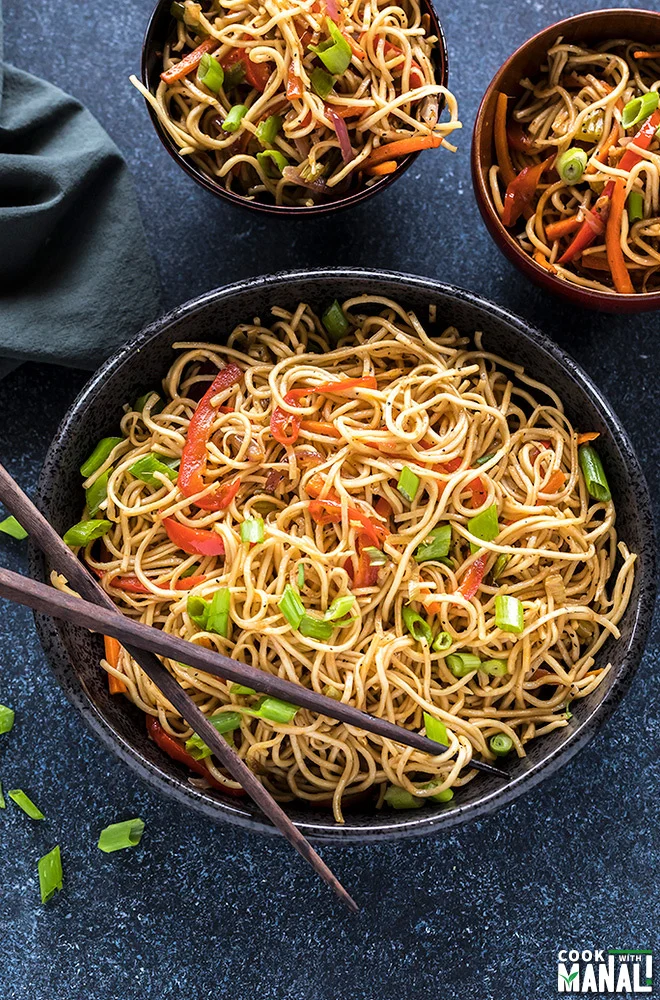
⭐ 1. Noodles
Use:
- Hakka noodles (preferred)
- Egg noodles
- Wheat noodles
Avoid instant noodles — they become mushy.
⭐ 2. Vegetables
Fresh, crunchy veggies are the heart of Hakka Noodles:
- Carrot
- Capsicum (green, red, yellow)
- Cabbage
- Beans
- Spring onions
- Onions
- Baby corn
- Mushrooms
Cut vegetables thin so they cook fast on high heat.
⭐ 3. Aromatics
- Garlic (finely chopped)
- Ginger (optional)
- Green chilies
- Spring onion greens
⭐ 4. Sauces
- Light soy sauce
- Dark soy sauce (for color)
- Green chili sauce
- Red chili sauce
- Tomato ketchup
- Vinegar
- Toasted sesame oil
- Schezwan sauce (optional for heat)
⭐ 5. Seasonings
- Black pepper powder
- Salt
- Sugar (optional, balances flavor)
⭐ 6. Oil
Use oil with high smoke point:
- Sunflower oil
- Peanut oil
- Canola oil
Avoid butter or ghee — it ruins Indo-Chinese flavor.
🍳 How to Make Perfect Hakka Noodles – Step-by-Step Recipe
This premium recipe teaches you restaurant-style Hakka Noodles at home.
🍜 Step 1: Boil the Noodles Properly
- Bring a large pot of water to boil.
- Add salt and a few drops of oil.
- Add the noodles and cook until al dente — firm but cooked.
- Immediately drain the water.
- Rinse noodles under cold water to stop cooking.
- Toss with 1 tsp oil to prevent sticking.
Do NOT overcook — mushy noodles ruin the dish.
🔪 Step 2: Prepare the Vegetables
Cut all vegetables into thin strips (juliennes). Indo-Chinese cooking uses:
- Fast chopping
- Thin slices
- Long strips
This helps vegetables cook quickly in a hot wok.
🔥 Step 3: High-Heat Stir-Frying (Restaurant Technique)
- Heat a wok until very hot.
- Add 2 tbsp oil.
- Add garlic, ginger, and chilies — stir 10 seconds.
- Add onions and sauté 15–20 seconds.
- Add cabbage, carrot, capsicum, beans — toss on HIGH flame.
- Add soy sauce, vinegar, chili sauce, and optional schezwan sauce.
- Add boiled noodles.
- Toss vigorously for 1–2 minutes to coat evenly.
- Add black pepper and adjust salt.
- Finish with spring onion greens.
High flame is crucial for smoky street-style Hakka Noodles.
🍽️ Types of Hakka Noodles (Premium Variations)
Below are the most popular variations seen in restaurants & food trucks:
1. Veg Hakka Noodles
The original version — packed with fresh vegetables and Indo-Chinese sauces.
2. Chicken Hakka Noodles
Juicy strips of chicken stir-fried with noodles for a protein-rich version.
3. Egg Hakka Noodles
Scrambled eggs mixed with noodles — a favorite among college students.
4. Paneer Hakka Noodles
Cubes of paneer tossed with spicy sauces for a creamy-spicy Indo-Chinese flavor.
5. Schezwan Hakka Noodles
A fiery red version made using schezwan sauce — bold, spicy, delicious.
6. Chili Garlic Noodles
Strong garlic aroma + crushed chili heat.
7. Street Style Tawa Noodles
Cooked on a large flat tawa with extra oil & masala — smoky, spicy, and addictive.
8. Kids-Friendly Butter Noodles
Mild, soft, buttery noodles with minimal spice.
🌶️ Restaurant Secrets for Smoky & Perfect Hakka Noodles

Here are professional-level tips:
🔥 1. Use HIGH flame always
Smokiness (“wok hei”) comes only from intense heat.
🍜 2. Do not overcrowd the wok
Too many noodles = steamed noodles = bad texture.
🍳 3. Keep vegetables crunchy
Do NOT overcook veggies — they must stay crisp.
🥢 4. Add sauces early
This helps even coating and deeper flavor.
🍶 5. Use sesame oil at the end
Adds authentic aroma and richness.
❄️ 6. Use cold noodles for stir-frying
Chilled noodles stay firm and non-sticky.
🧂 7. Balance flavors
Indo-Chinese flavor = spicy + salty + tangy + umami + mild sweetness.
🌿 Health Benefits of Hakka Noodles
✔ High in vegetables
Great source of fiber and vitamins.
✔ Can be protein-rich
Add egg, tofu, paneer, or chicken.
✔ Energy booster
Carbohydrates provide quick energy.
✔ Customizable
Can be made low-oil, low-sodium, or gluten-free.
✔ Balanced meal
Combine with veggies + noodles + protein for a complete dish.
❌ Common Mistakes When Making Hakka Noodles
Avoid these for best results:
1. Overcooking noodles
Becomes mushy and breaks apart.
2. Stir-frying on low heat
Makes noodles soggy.
3. Using too many sauces
Makes dish wet instead of dry.
4. Not rinsing noodles after boiling
Causes sticking.
5. Adding vegetables too early
They release water and become soft.
6. Adding raw aromatics late
Garlic must cook slightly to release fragrance.
🥡 How to Store & Meal Prep Hakka Noodles
🧊 Refrigeration
- Stays fresh for 24–36 hours.
- Toss in little oil to avoid sticking.
❄️ Freezing
- Boiled noodles can be frozen for 1 month.
- Do NOT freeze fully cooked Hakka Noodles — veggies lose crunch.
🍱 Meal Prep
- Boil noodles and chop vegetables ahead.
- Stir-fry fresh in 5 minutes.
📝 Conclusion – Why Hakka Noodles Will Always Be a Favorite
Hakka Noodles is not just a dish — it is an emotion shared across India. From school canteens to late-night street stalls, from office lunches to weekend cravings, Hakka Noodles remains a go-to comfort meal.
Its unique blend of:
- Crunchy vegetables
- Springy noodles
- Indo-Chinese sauces
- Smoky wok aroma
…makes it unforgettable.
❓ Frequently Asked Questions (FAQ)
1. Why do my noodles become sticky?
Because they are overcooked or not rinsed in cold water after boiling.
2. Can I make Hakka noodles without a wok?
Yes, use a wide nonstick or cast-iron pan.
3. What is the difference between Hakka Noodles and Chowmein?
Hakka noodles → stir-fried, Indo-Chinese flavor
Chowmein → slightly oilier, more Chinese in taste
4. Which noodles are best for Hakka Noodles?
Hakka noodles, wheat noodles, or egg noodles.
5. Why are restaurant noodles smoky?
Because they cook on very high flame (“wok hei”).
6. Are Hakka noodles healthy?
Yes, especially when cooked with lots of veggies and moderate oil.
7. Can I use spaghetti instead of Hakka noodles?
Yes, spaghetti works surprisingly well as a substitute.
8. Which sauce is most important?
Soy sauce is essential, but chili & vinegar define Indo-Chinese flavor.
9. Can kids eat Hakka Noodles?
Yes — reduce the amount of chili.
10. Why do my vegetables become soggy?
Flame is too low or vegetables were added too early.
11. Can I add paneer to Hakka Noodles?
Yes, paneer noodles are delicious and very popular.
12. Is sesame oil necessary?
Not required, but it adds premium aroma.
13. Can I make gluten-free Hakka Noodles?
Yes — use rice noodles or millet noodles.
14. What protein goes best with Hakka Noodles?
Egg, chicken, tofu, prawns, or paneer.
15. How do restaurants keep noodles from breaking?
By boiling them al dente and rinsing with cold water.