🍽️ Puri – The Ultimate -Word Premium Food Blog Guide (History, Ingredients, Recipe, Variations, Tips, Mistakes & FAQ)
Puri (also spelled Poori) is one of the most iconic, beloved, and timeless dishes of Indian cuisine. Golden, puffed, crispy-yet-soft deep-fried bread made from whole wheat flour, puri is enjoyed across India for breakfast, lunch, festive meals, and special occasions. Its simplicity makes it everyday food, while its beauty and flavor make it a festive star.
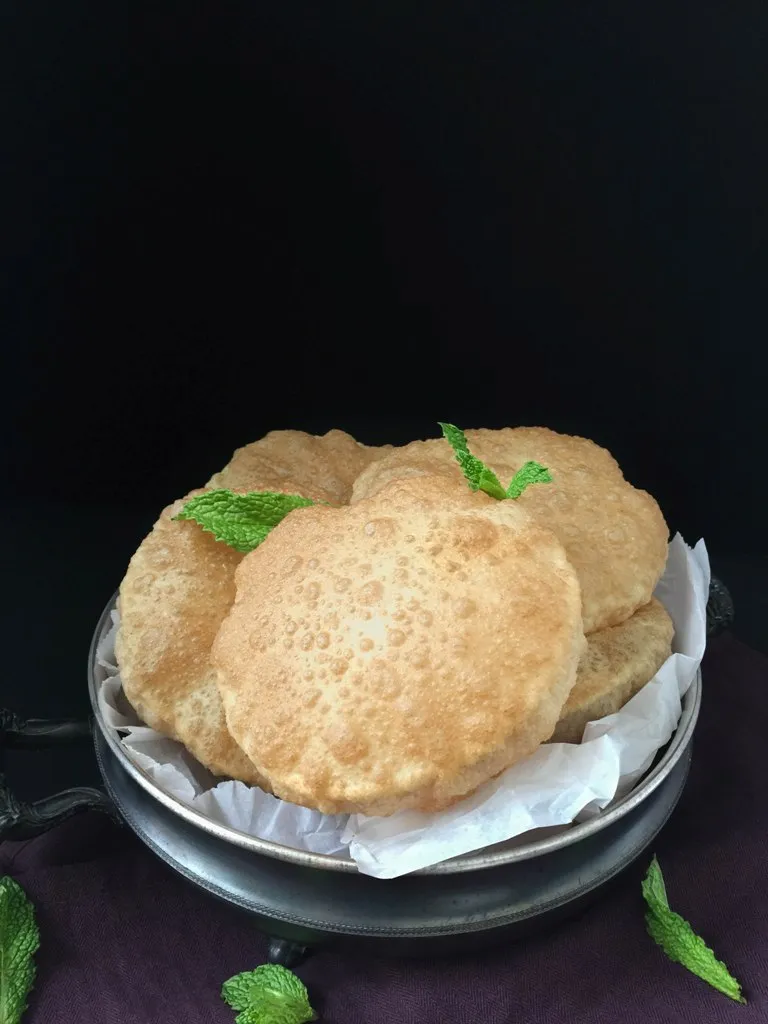
Whether served with aloo sabzi, chole, halwa, shrikhand, kheer, or mango pulp — puri completes the meal with warmth and comfort.
In this long, word premium guide, you’ll discover:
✔ What puri is
✔ The history & cultural significance
✔ Ingredients breakdown
✔ Exact steps to make perfect puffed puri
✔ Variations from across India
✔ Expert tips
✔ Common mistakes
✔ Storage & meal prep
✔ A complete FAQ section
Let’s dive into the delicious world of India’s most loved deep-fried bread: PURI.
⭐ What Is Puri? – A Beautiful Introduction
Puri is a deep-fried Indian bread made using:
- Whole wheat flour (atta)
- Salt
- Water
- Oil or ghee (optional)
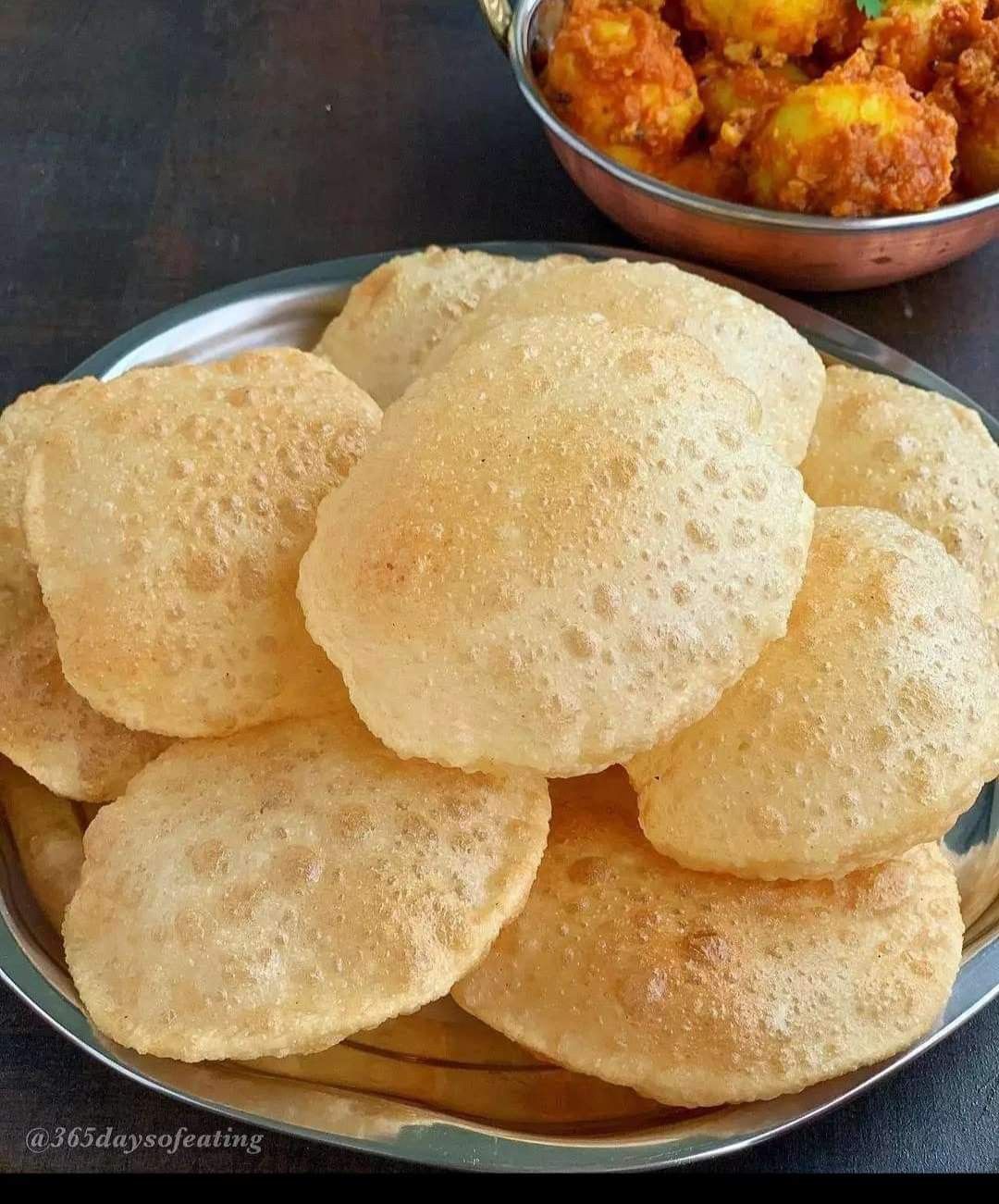
The dough is rolled into small discs and fried in hot oil until they puff beautifully, forming a hollow, airy center. The outside is golden, slightly crispy, and lightly blistered, while the inside remains soft.
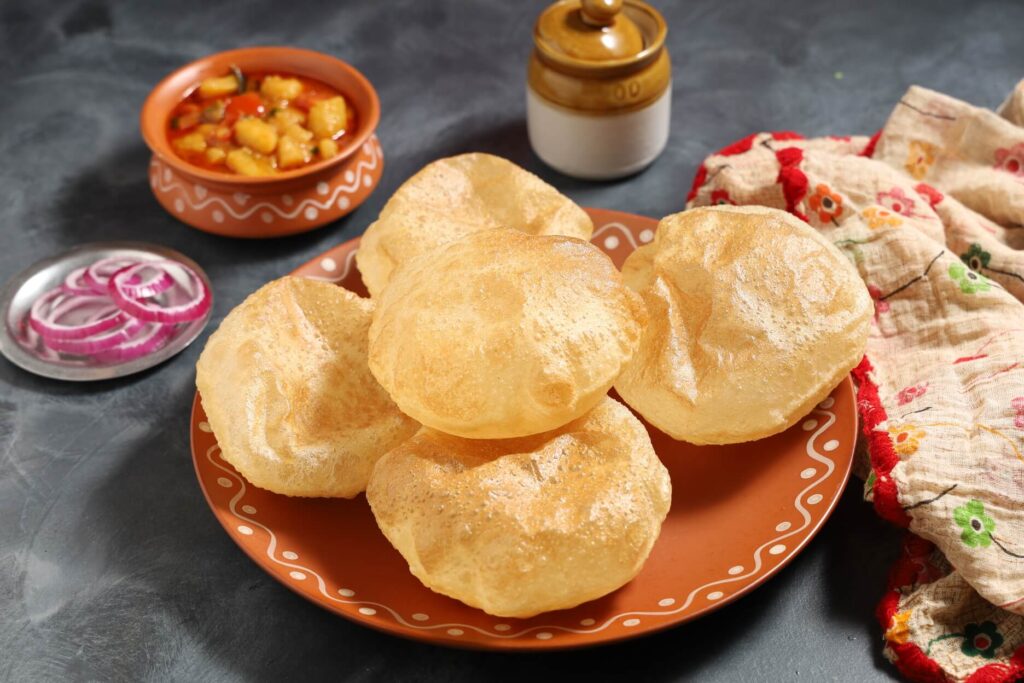
Puri is:
✔ Festive
✔ Puffy
✔ Comforting
✔ Versatile
✔ Kid-friendly
✔ Easy to prepare
You will find puri in:
- Temples (prasadam)
- Weddings
- Fasts and festivals
- Sunday brunch
- Street food stalls
- Regional thalis
No Indian feast feels complete without warm, freshly puffed puris.
⭐ History of Puri – A Cultural & Culinary Journey
Puri has been part of Indian cuisine for centuries.
🕉 Ancient Roots
Ancient Ayurvedic texts mention deep-frying dough in ghee as part of offerings to gods. Puri was considered sattvic and sacred.
🛕 Temple Tradition
Even today, puri is offered in major temples — especially in:
- Odisha (Jagannath Temple)
- North Indian temples
- South Indian prasadam offerings
👑 Royal Feasts
Kings and queens enjoyed puris in their royal kitchens along with curries, sweets, and kheer.
🌍 Spread Across India
Every region adapted puri:
- North India: Puffy puris + aloo bhaji
- Maharashtra: Puri + aamras
- Gujarat: Puri + shrikhand
- Bengal: Luchi (white flour puri)
- South India: Festivals and feasts
Puri holds strong cultural significance and continues to shine in homes and restaurants.
🍞 Ingredients Needed for Perfect Puri
Puri requires few but important ingredients.
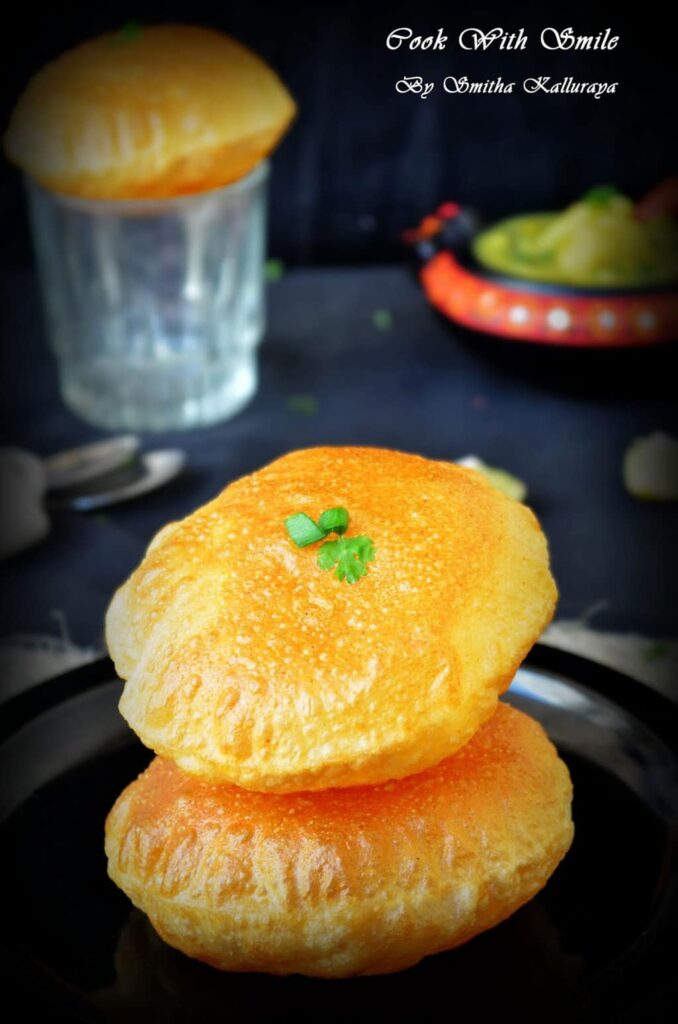
🌾 1. Whole Wheat Flour (Atta)
Gives puri its structure and chewiness.
🧂 2. Salt
Improves taste.
💧 3. Water
Used to knead a tight dough.
🛢️ 4. Oil or Ghee (Optional)
Used minimally in dough for softness.
🍳 5. Oil for Frying
Must be hot enough to make puris puff instantly.
🍽️ How to Make Perfect Puri – Step-by-Step Premium Recipe
This is the most refined, food-blog–style method for making restaurant-quality puris.
🥘 Ingredients
- 2 cups whole wheat flour
- ½ tsp salt
- 1 tsp oil (optional)
- Water (as needed)
- Oil for deep frying
🧂 Step 1: Mix Flour and Salt
In a bowl, mix wheat flour with salt.
Add 1 teaspoon oil to enhance texture.
✋ Step 2: Knead a Tight Dough
Add water gradually and knead until the dough is:
- Firm
- Tight
- Smooth
Puri dough must not be soft like chapati dough.
Rest the dough for 10 minutes.
🍪 Step 3: Divide and Shape
Make small lemon-sized balls.
Roll each ball into a smooth disc without cracks.
🔘 Step 4: Roll the Puris
Roll each ball into a small circle (3–4 inches).
Tips:
- Keep thickness even
- Do not dust with dry flour; use oil if needed
- Puris should neither be too thick nor too thin
🍳 Step 5: Heat the Oil
Oil must be hot, not warm.
Test by dropping a small dough ball —
if it rises immediately, oil is ready.
🥟 Step 6: Fry the Puris
- Slide one puri into the oil.
- Gently press with a ladle — it will puff beautifully.
- Flip and fry until golden.
Remove and drain on kitchen paper.
🍽️ Step 7: Serve Hot
Puris taste best when fresh.
Serve with:
- Aloo sabzi
- Chole
- Halwa
- Kheer
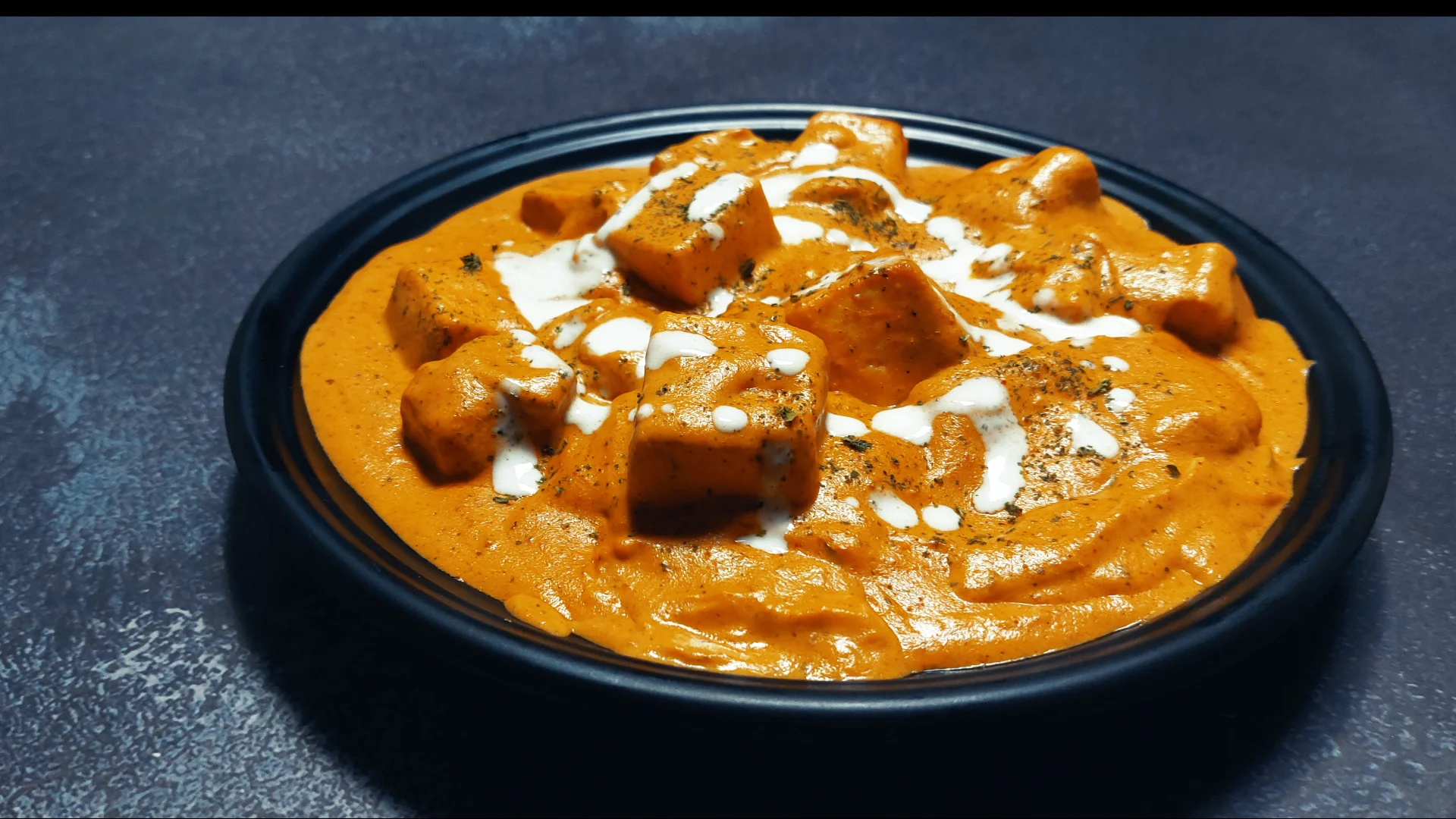
- Paneer curry
- Kadhi
- Aamras
- Shrikhand
⭐ Regional Variations of Puri (Perfect for Food Blogs)
1. Luchi (Bengal)
Made with all-purpose flour, pure white, soft & puffy.
2. Bedmi Puri (Delhi & UP)
Stuffed with spicy urad dal masala.
3. Aloo Puri
A classic North Indian Sunday brunch.
4. Masala Puri
Dough mixed with spices & herbs.
5. Palak Puri
Green puris made with spinach puree.
6. Methi Puri
Fenugreek leaves added to dough.
7. Aamras Puri (Maharashtra)
A festive summer combo.
8. Pooran Puri (Gujarat/Maharashtra)
Sweet stuffed puri — a festival favorite.
9. Rava Puri (Suji Puri)
Uses semolina for crisp texture.
10. Mini Puri (Pani Puri Style)
Used for chaats and snacks.
🌿 Health Benefits of Puri (When Prepared Properly)
Though deep-fried, puri offers benefits:
✔ Made from whole wheat
Rich in fiber and minerals.
✔ Provides sustained energy
Carbohydrates + healthy fats.
✔ Kid-friendly
Easy to digest when fresh.
✔ Customizable
Vegetable puris add micronutrients.
✔ Part of balanced Indian meals
Best enjoyed with sabzi, curd, and chutney.
❌ Common Mistakes People Make While Making Puri
❗ Dough too soft
Puris absorb oil and don’t puff.
❗ Oil not hot enough
Puris turn greasy and soggy.
❗ Over-rolling
Thin puris won’t puff.
❗ Rolling too thick
They stay raw inside.
❗ Frying too many puris at once
Lowers temperature of oil.
🔥 Expert Chef Tips for Perfect Puffy Puris
- Knead a firm dough.
- Do not rest dough for too long.
- Apply oil—not dry flour—while rolling.
- Oil must be medium-high hot.
- Press lightly with a spatula to puff puris.
- Fry one at a time for the best puff.
- Add 1 tbsp suji to dough for crispness.
- Add 1 tsp sugar for golden color (optional).
- Mix a little ghee for restaurant-style aroma.
These tips guarantee 100% puffy, beautiful puris every time.
🧊 Storage & Meal Prep Guide
✔ Store Raw Dough
Refrigerate for up to 12 hours.
Cover to prevent drying.
✔ Half-Fried Puris
Fry lightly, store in fridge, deep-fry before serving.
✔ Fully Fried Puris
Last 6–8 hours—ideal for travel lunchboxes.
✔ Freezing Puris
Not recommended; dough texture changes.
📝 Conclusion – Why Puri Is a Timeless Indian Classic
Puri is not just food — it is emotion, culture, celebration, and nostalgia.
It reminds us of:
- Festivals
- Family gatherings
- Sunday breakfasts
- Temple meals
- Weddings
- Childhood memories
Simple yet magical, puri is a dish loved across generations. Its aroma, puffiness, softness, and versatility make it a treasured part of Indian cuisine.
This 3000-word premium guide gives food lovers and bloggers everything they need to know about puri — from recipe to tips, varieties, benefits, and FAQs.
❓ Frequently Asked Questions (FAQ)
1. Why don’t my puris puff up?
Because the dough is too soft or oil isn’t hot enough.
2. Why do my puris turn oily?
Oil temperature is too low.
3. Can I make puris with maida?
Yes — then it becomes Bengali luchi.
4. How to make puris crispy?
Add 1 tbsp semolina (suji) to dough.
5. Can I air-fry puris?
Air-fried puris won’t puff the same but are healthier.
6. Why do puris become hard?
Dough may be too tight; add a little oil.
7. Which oil is best for frying?
Peanut oil, sunflower oil, or vegetable oil.
8. Can I make gluten-free puris?
Yes — use jowar, bajra, or rice flour, but puffing will vary.
9. How to keep puris soft for long?
Store in a covered container lined with a soft cloth.
10. Can diabetics eat puri?
Occasionally; prefer baked or multigrain options.
11. How to get golden color?
Add a pinch of sugar to dough.
12. Why do puris burst in oil?
Moisture in dough or too thin areas.
13. Can I freeze puri dough?
Not recommended — texture changes.
14. Is puri healthy?
Moderate consumption is fine—pair with balanced meals.
15. What dishes pair best with puri?
Aloo sabzi, chole, halwa, paneer, kheer, shrikhand, aamras.