Pav Bhaji – A Spicy, Buttery, Iconic Indian Street Food Loved Across the World
Pav Bhaji is not just food — it is pure happiness served on a sizzling tawa.
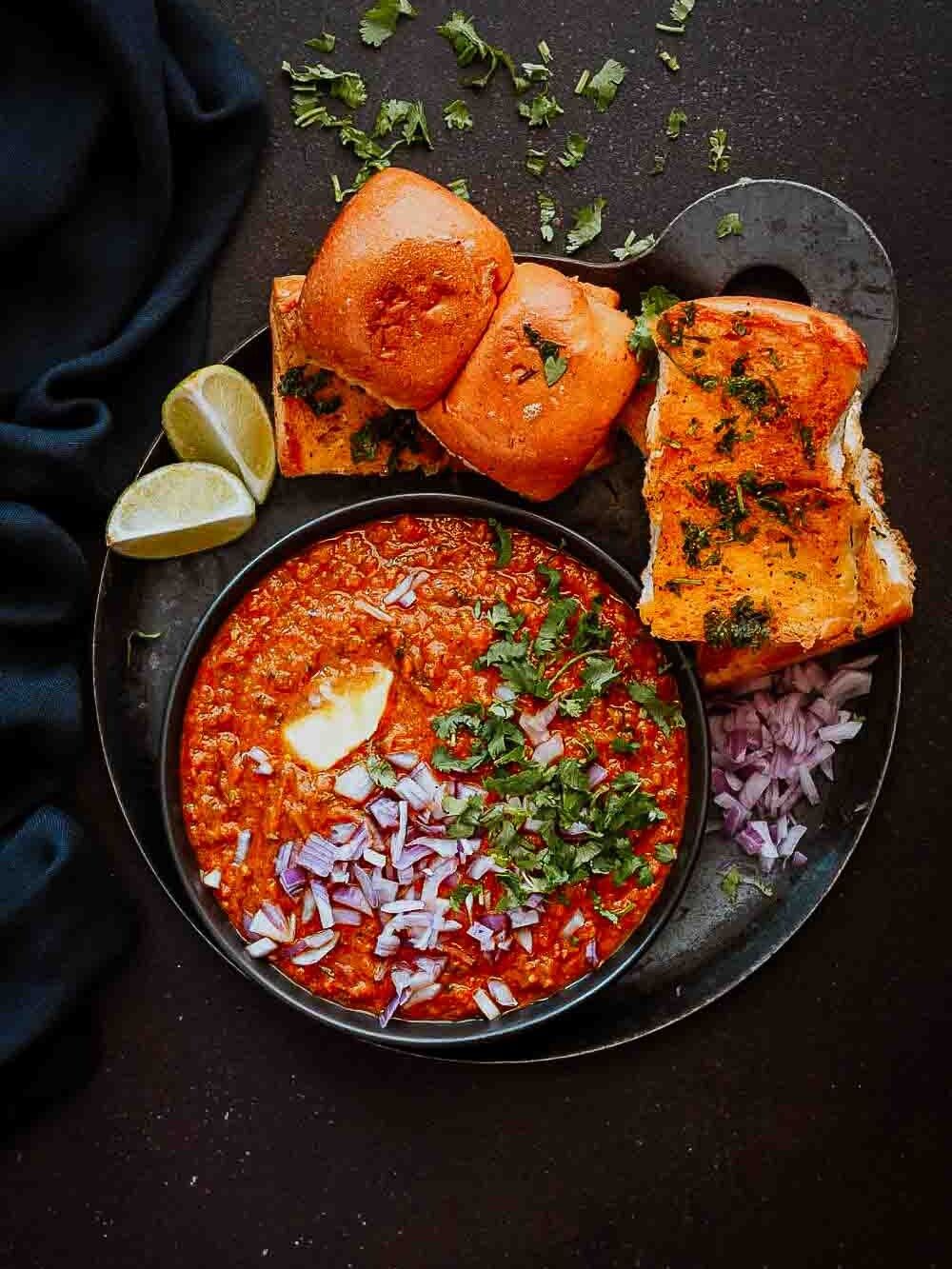
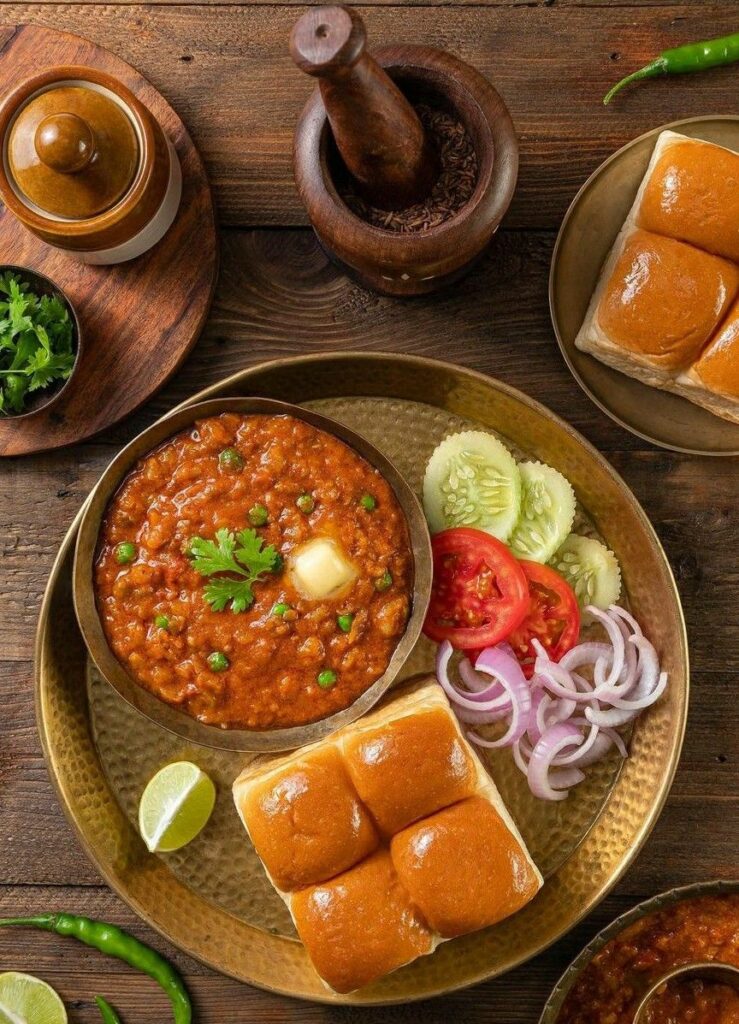
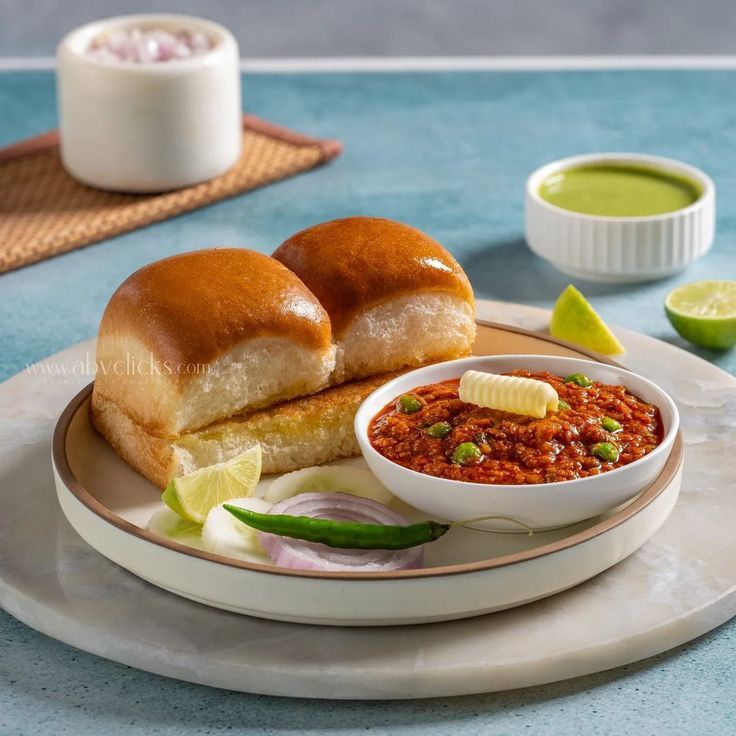
A buttery, spicy, mashed vegetable curry (bhaji), topped with coriander, onions, lemon, and an extra cube of melting butter… paired with hot, golden, soft pav roasted in butter — this combination is one of India’s most loved street foods.
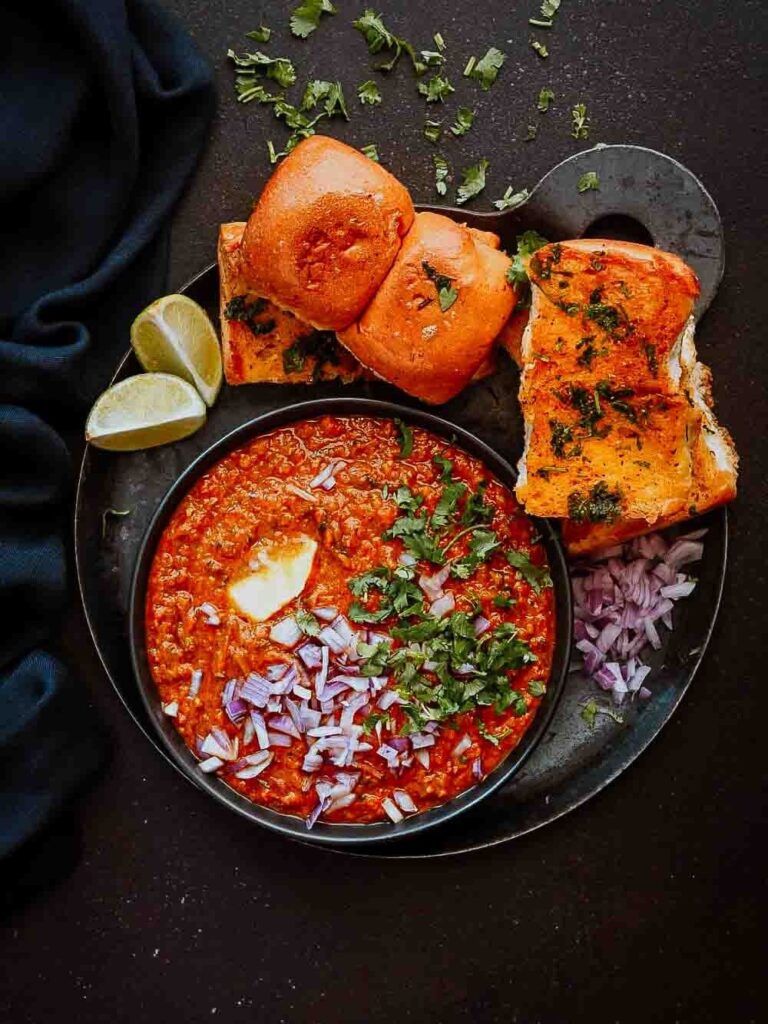
From Mumbai’s Juhu Chowpatty to restaurants across the world, Pav Bhaji has become a global favourite. This premium guide includes:
- What Pav Bhaji is
- How it originated
- Complete ingredients list
- Step-by-step Pav Bhaji recipe
- Types of Pav Bhaji
- How to serve
- Expert tips
- Health benefits
- Detailed FAQ
Let’s begin exploring the king of Indian street food!
🍽️ What is Pav Bhaji?
Pav Bhaji is a famous Indian street food consisting of:
👉 Pav
Soft bread rolls (usually square-shaped), shallow-fried in butter.
👉 Bhaji
A spicy smashed vegetable curry made on a large tawa using:
- Potatoes
- Tomatoes
- Capsicum
- Green peas
- Onions
- Red chilli
- Pav bhaji masala
- Butter
The dish is:
- Rich
- Spicy
- Tangy
- Butter-loaded
- Comforting
- Filling
Every bite feels like a festival of flavours.
📜 History of Pav Bhaji
Pav Bhaji was invented in Mumbai in the 1850s.
During that time, cotton mill workers needed a quick, affordable, filling meal during their short lunch breaks. Street vendors created a dish using leftover vegetables mashed together with spices and served with buttered pav — and thus, Pav Bhaji was born!
Today, Pav Bhaji is:
- A top-selling street food
- A restaurant specialty
- A comfort meal in Indian homes
- Loved by all ages
🧂 Ingredients Used in Pav Bhaji
To make authentic pav bhaji, you need:
Vegetables:
- Potatoes
- Tomatoes
- Onions
- Capsicum
- Green peas
- Carrots (optional)
- Cauliflower (optional)
Spices:
- Pav bhaji masala
- Red chilli powder
- Turmeric
- Coriander powder
- Salt
- Kasuri methi
- Lemon juice
Others:
- Butter (lots of it!)
- Oil
- Ginger-garlic paste
- Fresh coriander
- Pav (bread rolls)
🥘 How to Make Pav Bhaji – Step-by-Step Guide
Here is the full professional recipe, explained in detail.
⭐ Step 1 – Boil the Vegetables
In a pressure cooker, add:
- Potatoes
- Green peas
- Carrots
- Cauliflower
Boil until soft enough to mash.
These vegetables form the creamy base of bhaji.
⭐ Step 2 – Prepare the Masala Base
On a tawa or large pan:
- Add butter + oil
- Add chopped onions
- Fry until golden
- Add ginger-garlic paste
- Add chopped tomatoes
- Add capsicum
- Cook until everything becomes soft
This mixture gives Pav Bhaji its iconic aroma.
⭐ Step 3 – Add Spices
Add:
- Pav bhaji masala
- Red chilli powder
- Turmeric
- Salt
Mix well.
Cook until oil separates — this means the masala is ready.
⭐ Step 4 – Add Boiled Veggies and Mash
Add the boiled vegetables to the masala.
Start mashing using a masher.
Keep mashing and adding water until you get a:
- Smooth
- Thick
- Perfectly blended
- Restaurant-style consistency
Simmer for 10–15 minutes so spices blend deeply.
⭐ Step 5 – Add Butter (The Mumbai Secret)
A big spoon of butter is added at this stage.
This enhances:
- Aroma
- Taste
- Texture
Mumbai street food vendors often add extra butter, kasuri methi, and lemon juice.
⭐ Step 6 – Toast the Pav
On a hot tawa:
- Add butter
- Sprinkle a pinch of pav bhaji masala
- Toast pav until golden and soft
Your premium-style Pav Bhaji is ready!
🍛 Taste, Texture & Aroma of Pav Bhaji
Pav Bhaji is:
Spicy:
Thanks to red chilli and pav bhaji masala.
Buttery:
Soft pav soaked in butter enhances the richness.
Creamy:
Mashed potatoes and peas give a smooth, thick texture.
Tangy:
Lemon and tomatoes balance the spiciness.
Aromatic:
Butter + garlic + spices create an unforgettable aroma.
🌶️ Different Types of Pav Bhaji (Popular Variations)
1. Mumbai Street-Style Pav Bhaji
Extra butter, deep red colour, very spicy.
2. Jain Pav Bhaji
No onion
No garlic
No potatoes
Made with raw bananas and veggies.
3. Cheese Pav Bhaji
Loaded with grated cheese — kids love this.
4. Khada Pav Bhaji
Vegetables are not mashed completely, giving a chunky texture.
5. Kolhapuri Pav Bhaji
Very hot and spicy, uses special Kolhapuri masala.
6. Paneer Pav Bhaji
Topped with paneer cubes or paneer bhurji.
7. Butter Pav Bhaji
Just extra butter — lots of it!
8. Tawa Pav Bhaji
Cooked entirely on a large tawa for smoky flavour.
🍽️ How to Serve Pav Bhaji (Restaurant Style)
A perfect pav bhaji plate includes:
✔ Hot Bhaji
Served with a dollop of melting butter.
✔ Buttered Pav
Soft, warm, golden, aromatic.
✔ Onion
Finely chopped.
✔ Lemon wedges
To squeeze on top.
✔ Fresh coriander
For garnish.
✔ Green chilli (optional)
For spice lovers.
Serve hot — Pav Bhaji tastes best when fresh.
💪 Health Benefits of Pav Bhaji
Though Pav Bhaji is known as street food, it has several benefits:
✔ High in carbohydrates (energy boost)
From potatoes and pav.
✔ Good source of vitamins
Tomatoes, capsicum, and peas provide vitamin A, C, K, and folate.
✔ Fiber-rich
Peas and veggies help digestion.
✔ Good comfort food
Relieves cravings and lifts mood.
But remember:
The dish uses lots of butter, so it’s best enjoyed occasionally.
🎯 Expert Tips for Making the Best Pav Bhaji Ever
- Use a large tawa for best flavour.
- Add butter at different stages for richness.
- Use high-quality pav bhaji masala (MDH, Everest, or homemade).
- Don’t skip capsicum — it gives fragrance.
- Balance flavours with lemon juice.
- Add water slowly to adjust thickness.
- Mash well — smooth bhaji tastes more professional.
- Always toast pav in butter, not oil.
- Add a little kasuri methi at the end.
- Sprinkle chaat masala before serving for a street-style punch.
❓ Frequently Asked Questions (FAQ)
1. Is Pav Bhaji healthy?
It contains healthy vegetables but is also high in butter and carbs.
Best enjoyed occasionally.
2. Which pav is best for Pav Bhaji?
Soft ladi pav — commonly used in Mumbai.
3. Why is my Pav Bhaji not red?
Add:
- Kashmiri red chilli powder
- Tomatoes
- Beetroot juice (optional)
Avoid artificial food colours.
4. Can I make Pav Bhaji without butter?
Yes. Replace butter with oil.
But the authentic flavour comes from butter.
5. Can Pav Bhaji be stored?
Yes. Refrigerate for 1–2 days.
Reheat and add butter before serving.
6. Why is my bhaji too thick?
Add warm water and mix well.
7. Why is my bhaji watery?
Mash more and simmer longer.
8. Can I make vegan Pav Bhaji?
Yes.
Use vegan butter or oil.
9. What is the best drink with Pav Bhaji?
Masala soda or cold lassi tastes great.
10. What vegetables can I add to bhaji?
Most common are:
- Potatoes
- Capsicum
- Tomatoes
- Peas
- Carrots
- Cauliflower